

07 Sept 2026 · 6 min read
The problem
Distribution businesses juggle purchase orders, warehouse stock, sales orders and claims across multiple locations. Without one connected view, it's hard to know the true stock position, or to spot the gap between what was ordered and what was actually invoiced until it shows up at reconciliation.
What we built
SCMS tracks a business's purchase, stock, sales and claims activity as one connected system, built and deployed to give a distribution team a live picture of how stock and orders move.
-
01
Purchase, stock, sales and claims as connected modules
Reflecting the true state of inventory at all times rather than a periodic manual count.
-
02
A real-time dashboard comparing orders against invoices
By count, amount and quantity — so the gap between what was ordered and what was billed is visible immediately, not discovered later.
-
03
Top-10 leaderboards
For selling parties, purchase activity and sales performance, giving a ranked view of where the business is concentrated without building the report by hand.
-
04
Claims tracked as their own module
A return or a billing correction has a permanent record instead of being folded into a general note.
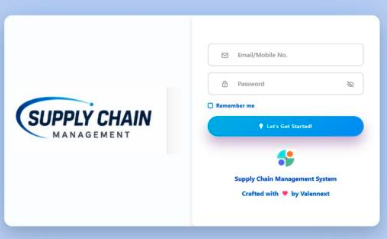
Screenshot 1
What changed
Stock position reflects live activity.
Purchase, stock, sales and claims sit in one connected system rather than four separate records that need reconciling.
The order-to-invoice gap is visible before it's a problem.
The dashboard compares the two by count, amount and quantity in real time.
Returns and corrections have a record.
Claims are tracked as their own module rather than getting folded into a general note or a phone call.